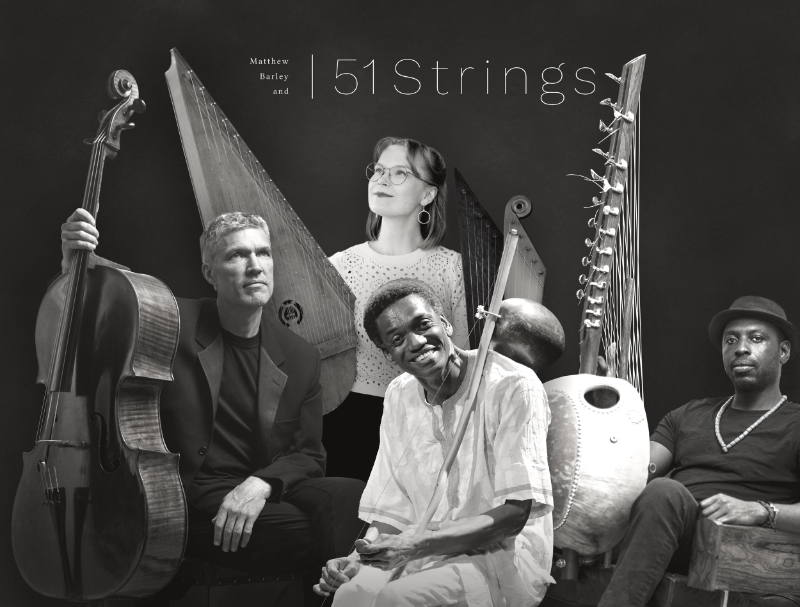
Dark Lullabies and Light Grooves – compositions and improvisations based on folk music from Brazil, England, Finland and The Gambia
Matthew Barley – cello, UK
matthewbarley.com
Hanna Rynnänen – kantele, Finland
hannaryynanenmusic.com
Dawda Jobarteh – kora, Gambia
instagram.com/dawda.jobarteh
Adriano Adewale – berimbau & percussion, Brazil
instagram.com/adrianoadewale
Dark Lullabies and Light Grooves explores the world of lullabies that have frightening, threatening or deeply sad lyrics, and ecstatic, upbeat rhythmic grooves, often with improvised solos. These two very different emotional landscapes complement each other as a form of tension and release.
Each of the four instruments in the band has a quarter of the programme to introduce the sounds of their instrument, the lullaby from their country, and to lead the grooves and improvisations.
The English lullaby explores the relatively mild world of Rock-a-bye Baby, in which the protagonist falls, cradle and all, from the treetop. In the lullaby from Finland the words are tragic, as a mother sings of wishing her baby will soon be dead, to be spared the suffering of a brutal and indifferent world. In Brazil, the child is encouraged to sleep with playful threats of a visit from Baratatu – a kind of giant mythological wood louse. In Gambia, the threats are a little more visceral – if you don’t sleep, Kuribamba will come with his machete and cut you to pieces!
Having researched this fascinating area both online and in many conversations with mothers, it seems that a lullaby has a kind of dual purpose: simple and soothing melodies to get little ones to sleep, and more complex lyrics which young mothers sing to themselves, expressing more challenging emotions.
We have come to these lullabies in different ways – everyone in Gambia knows of Kuribamba and could sing it, just as people in England know Rock-a-bye Baby. The Finnish text was discovered in a book archiving lullabies from the region (we used a melody from a different lullaby – in that Finnish Runosong tradition, melodies and texts are interchangeable), while the Brazilian one was sent as a voice note by Adriano’s 80-year-old ‘second mother’ from Salvador. We arranged it based on her singing, the heartful vibrancy of which leapt out of the phone into our ears, thousands of miles from where it was sung!
These four instruments are, of course, all stringed, and therefore the sound worlds can fit together easily and harmoniously. The cello binds the group together, duetting with all the other instruments and providing a legato singing voice as a foil to the other plucked and often percussive sounds.
Hanna, Dawda and Adriano bring to the group many years of deeply studied tradition and history, and their expertise is profoundly appreciated and enjoyed. All four of us are improvisers – committed to that ancient musical tradition, as practised all over the world for millennia – and find great joy and communion in that pursuit.
I came up with the structures of the piece and wrote some material in advance, and then we put the flesh on the bones during five inspiring and gloriously long working days at Hawkwood College in Gloucestershire. The working atmosphere was clear and focused, with a deep and loving respect flowing in all directions as we sought to find the common languages and sounds that would unify our various musical intentions.
Huge thanks to these intrepid companions and collaborators.
Matthew Barley